
Coach Sean’s competitive training program
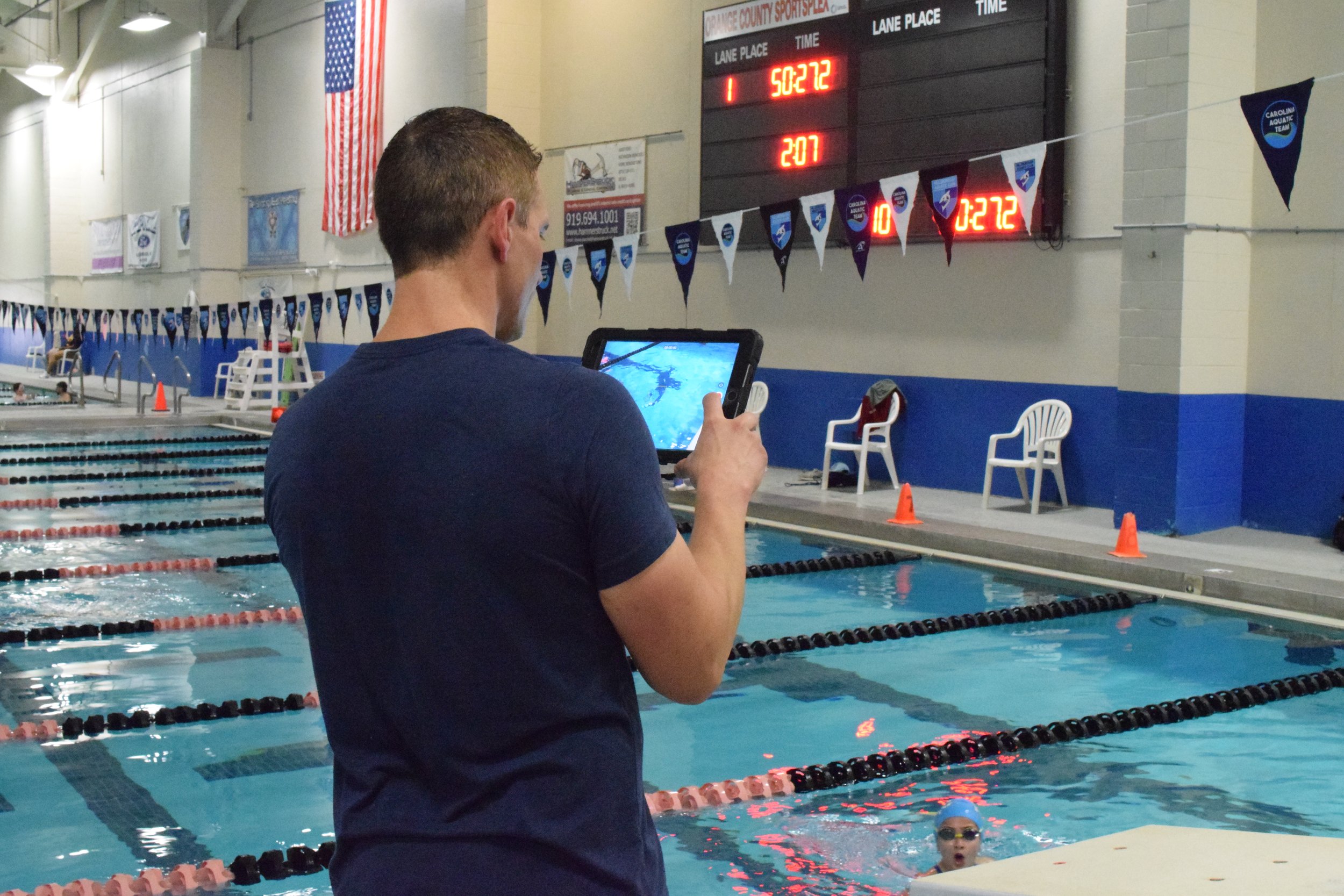
During our 1-on-1 sessions, we don’t just swim laps. We deconstruct every movement to eliminate drag and maximize propulsion. My curriculum is designed to transform a developmental stroke into a Junior National caliber weapon by focusing on these high-level technical pillars:
Master the 4 Competitive Strokes
We will refine each stroke from the ground up focusing on both the gross motor movements (power) and fine motor skills (precision).
Freestyle: Perfecting the Early Vertical Forearm (EVF) for a high-catch pull, bilateral breathing to maintain spine alignment, and a compact, rhythmic flutter kick.
Backstroke: Focus on steady head position, shoulder-to-hip rotation for power, and a clean hand entry to avoid crossing the midline.
Breaststroke: Mastering the narrow-knee kick for reduced drag and the precise timing of the pull-breathe-kick-glide cycle.
Butterfly: Developing the Fifth Stroke (underwater dolphin kick) and ensuring a fluid, chest-led undulation that doesn't waste energy vertically.
Explosive Starts and Dives
The race begins before you even hit the water. We use my background in strength and conditioning to improve explosiveness off the blocks.
Block Setup: Optimizing foot placement and center of gravity for the fastest reaction time.
The Flight Path: Learning to enter through a single “hole” in the water to maintain maximum velocity.
The Breakout: Identifying the exact moment to transition from the underwater phase to the first stroke without losing momentum.
Precision Turns and Transitions
In competitive swimming, turns are where races are won or lost. We treat the wall as a springboard, not a stopping point.
Freestyle/Backstroke Flip Turns: Tucking for a fast somersault, planting feet for a powerful push-off, and maintaining a pencil-tight streamline.
Breaststroke/Butterfly Open Turns: Perfecting the touch-and-go technique for the fastest possible rotation.
IM Transitions: Mastering the complex legal transitions between different strokes (e.g., the crossover turn from Backstroke to Breaststroke).
Technical “Invisible” Skills
The Underwater Phase: Intensive training on the dolphin kick and the 15-meter limit to capitalize on the fastest part of the race.
Distance Per Stroke (DPS): Training the athlete to move more water with fewer movements, significantly improving efficiency and endurance.
Breath Control: Implementing hypoxic training and proper breathing patterns so the athlete never gasps for air at the finish.